thebeewhisperer.co.uk is for sale. Enquiries and sensible offers welcome.Make an offer
A Summer for the Bees · North East England
TheBeeWhisperer
Britain has around 270 kinds of Bee — and only one of them makes honey. Here's who they are, how honey is really made and harvested, and how a single patch of long grass can fill your Summer with them.
We picture stripes and honey — but the honey Bee is just one species out of roughly 270 in Britain. Most of our Bees make no honey at all, and they're some of the hardest-working pollinators we have.
1 UK species
Honey Bees
The famous one, Apis mellifera. It lives in colonies of tens of thousands and stores honey to survive winter — the only Bee we keep in hives, and the only one whose honey we harvest.
~24 UK species
Bumblebees
Big, round and furry, in small colonies. They keep only a tiny few days' store of a honey-like food — never a surplus to harvest. Brilliant in cool weather, which is why they're out first on a chilly morning.
~250 UK species
Solitary & wild Bees
Mason, leafcutter and mining Bees — most of Britain's Bees. Each female nests alone, makes no honey, and quietly does a huge share of the pollinating. These are the ones your long grass feeds.
Honey is simpler than it sounds: it's nectar that honey Bees have gathered, changed with a little of their own chemistry, and dried down until it keeps. Here's the whole journey.
1
A forager sips nectar
A worker visits flower after flower, drawing up nectar into a special "honey stomach" — kept separate from the one she actually eats with.
2
It's passed along
Back at the hive she passes the nectar mouth-to-mouth to house Bees. Their enzymes — chiefly one called invertase — break the nectar's sugars into glucose and fructose.
3
Into the comb
The Bees lay it into six-sided cells of wax they build themselves — the honeycomb, a near-perfect little store.
4
Fanned dry
Fresh nectar is about 70% water. The Bees fan their wings over the comb to evaporate it down to roughly 18% — thick enough to keep for months.
5
Sealed with wax
Once it's ripe, they cap each cell with a lid of fresh wax, storing it away for the winter — or for us.
How honey is harvested
From hive to jar.
A Beekeeper only ever takes the surplus — the honey the colony can spare. It's a gentle, unhurried job, and nothing is added along the way.
1
A little smoke
A smoker keeps the Bees calm while the frames of capped honey are lifted out and the Bees gently brushed off.
2
Uncapping
The thin wax lids are scraped or forked off both sides of the comb to open the cells.
3
Spun out
The frames go into an extractor and are spun; the force flings the honey out to run down the sides.
4
Filtered & jarred
It's strained to remove bits of wax and pollen, then poured straight into jars.
Honest note: I don't keep hives — I just leave the lawn long for the wild ones. If you'd like to keep Bees properly, the British Beekeepers Association is where to start.
The garden that started it
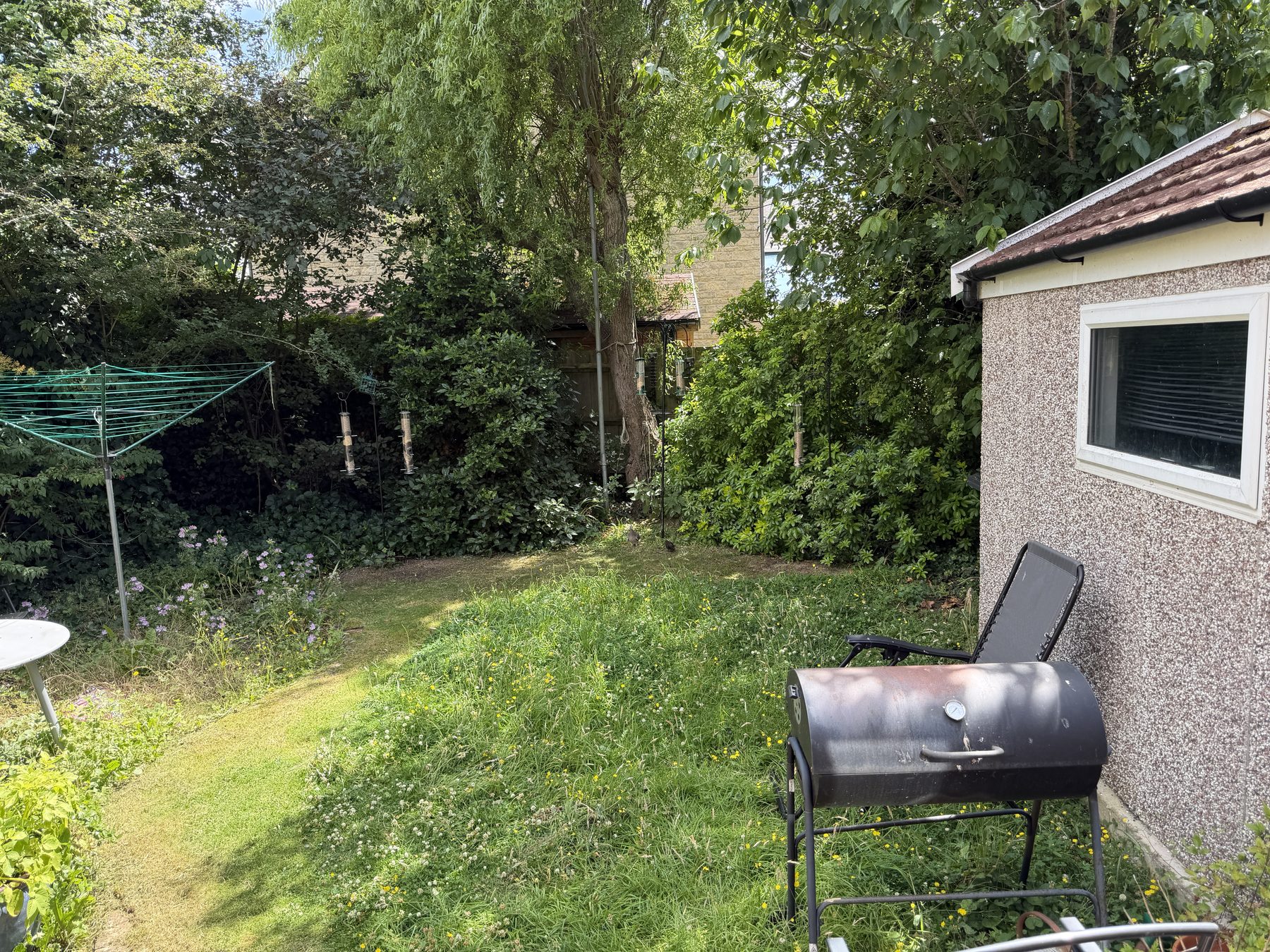
One mown path. The rest left wild.
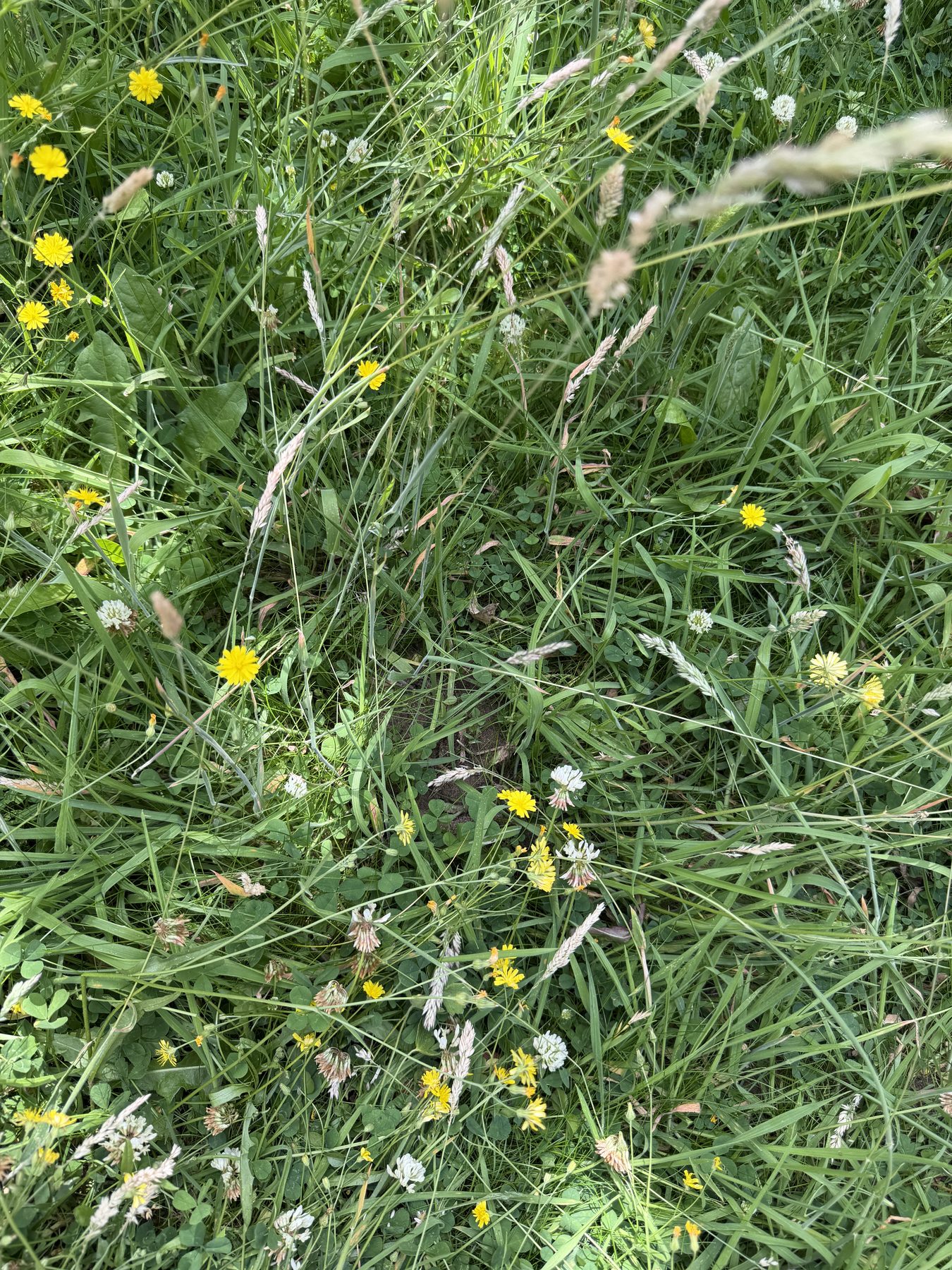
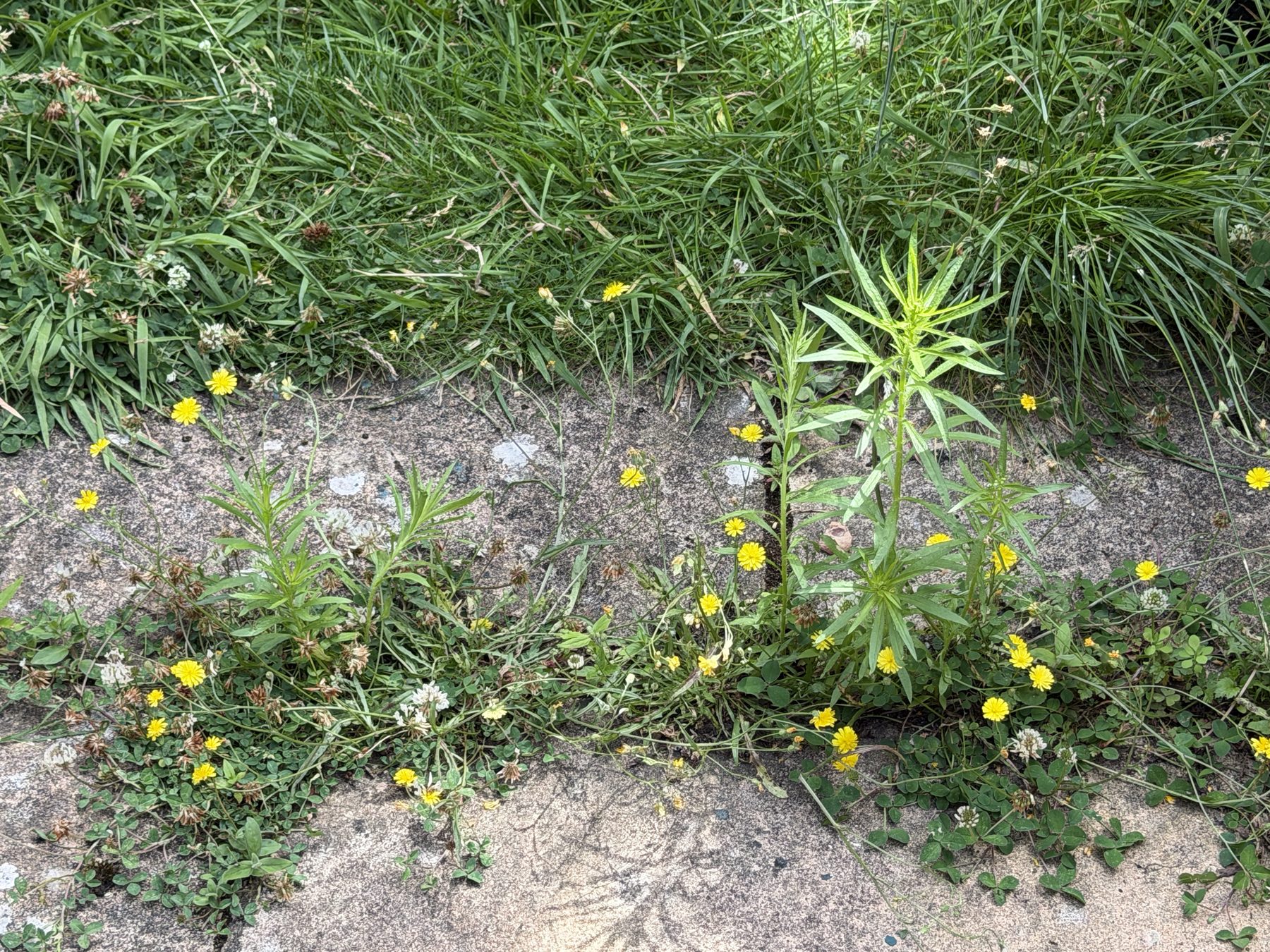
I cut a single strip to the bird feeders and left everything either side to grow. Within days it filled with clover and little yellow flowers — and the pollinators found it. A small back garden in the North East, now humming all Summer.
Start your own
Give the Bees a Summer.
You don't need a hive, or even a meadow. A single patch of long grass and clover is enough to feed the wild Bees on your street all Summer.
Step one
Cut a path, not the lawn
Mow a route to a shed, a bench or the feeders. The path says "this is deliberate" — the rest can grow.
Step two
Leave it and watch
Give it two or three weeks. Clover and wild flowers that were always in the soil start to show — and the Bees arrive within hours of the first flowers.
Step three
Cut once, late
One cut in late Summer, after the flowers have set seed. Take the cuttings off so the soil stays lean and flowery.
A few things that help
If you'd like to give it a hand.
You don't need to buy a thing — the lawn does most of it. But if you'd like to help the Bees along, these are the honest few that earn their place.
Bee-friendly wildflower seed mix
A native UK meadow mix for any bare patches — clover, knapweed, ox-eye daisy. Feeds Bees all Summer.
As an Amazon Associate, The Bee Whisperer may earn a small commission from qualifying purchases — at no extra cost to you. We only ever point to things that genuinely fit.
Wear the whisper.
Simple, honest Bee and garden T-shirts — printed and posted in the UK, no stock, no waste.